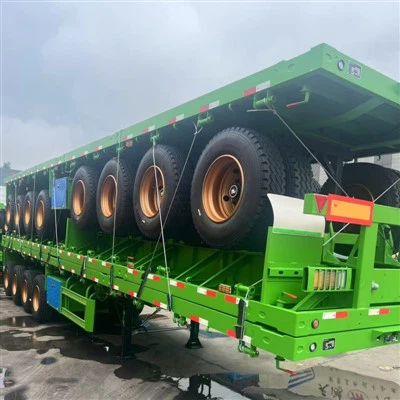

Optimizing the loading capacity of a LowBed Semi Trailer is a critical concern for businesses involved in heavy - haul transportation. As a LowBed Semi Trailer supplier, we understand the significance of this aspect and have gathered a wealth of knowledge and practical experience to share with you.
Understanding the Basics of LowBed Semi Trailers
Before delving into the optimization strategies, it's essential to have a clear understanding of what a LowBed Semi Trailer is. A lowbed semi - trailer is designed with a low deck height, typically between the axles, which allows for the transportation of tall and heavy equipment. The low center of gravity enhances stability during transit, making it suitable for hauling large construction machinery, industrial equipment, and other oversized loads.


Structural Considerations for Loading Capacity
The design and construction of the lowbed semi - trailer play a fundamental role in determining its loading capacity. High - quality materials, such as high - strength steel, are crucial. These materials can withstand greater stress and weight without compromising the integrity of the trailer structure. For instance, using thicker steel plates for the deck and stronger cross - members can significantly increase the overall load - bearing capacity.
Moreover, the frame design should be optimized. A well - engineered frame distributes the load evenly across the trailer, preventing concentrated stress points. Some advanced lowbed semi - trailers feature a modular frame design, which allows for easy customization and reinforcement based on specific loading requirements.
Axle Configuration and Loading
The axle configuration of a lowbed semi - trailer is another key factor in optimizing loading capacity. The number of axles directly affects the amount of weight the trailer can carry. More axles distribute the load over a larger area, reducing the pressure on each individual axle and tire.
Tri - axle or even multi - axle lowbed semi - trailers are common for heavy - haul applications. For example, a 3axle Flatbed Semi Trailer can handle substantial weights compared to a single - axle trailer. Additionally, the axle spacing is important. Properly spaced axles ensure that the load is evenly distributed, minimizing the risk of overloading any one part of the trailer.
Loading Techniques
Efficient loading techniques can also maximize the capacity of a lowbed semi - trailer. First and foremost, it's essential to understand the weight distribution of the load. Placing heavier items closer to the center of the trailer and evenly distributing the weight across the deck helps maintain stability and balance.
When loading multiple items, consider their shape and size. Stacking items in a way that minimizes wasted space and ensures a secure fit is crucial. For irregularly shaped loads, custom - made fixtures or restraints can be used to hold the items in place and make the most of the available space.
Utilizing Accessories and Add - ons
There are several accessories and add - ons that can enhance the loading capacity of a lowbed semi - trailer. Side extensions can be installed to increase the width of the deck, allowing for wider loads. These extensions can be easily attached and removed as needed, providing flexibility for different types of cargo.
Load - leveling systems are another useful addition. These systems automatically adjust the height of the trailer to ensure an even load distribution, especially when dealing with unevenly weighted loads. They can improve stability and prevent excessive wear on certain parts of the trailer.
Maintenance and Inspection
Regular maintenance and inspection of the lowbed semi - trailer are essential for maintaining its loading capacity. Worn - out tires, damaged axles, or weakened structural components can all reduce the trailer's ability to carry heavy loads safely.
Tires should be inspected regularly for proper inflation, tread depth, and signs of damage. Axles should be checked for alignment and any signs of wear or stress. The frame and deck should also be inspected for cracks, rust, or other structural issues. By addressing these problems promptly, you can ensure that the trailer remains in optimal condition for maximum loading capacity.
Comparison with Other Trailer Types
It's also beneficial to compare the lowbed semi - trailer with other types of trailers, such as Fence Semi Trailer. While fence semi - trailers are suitable for transporting loose materials and smaller items, lowbed semi - trailers are specifically designed for heavy and oversized loads. The low deck height and robust construction of lowbed semi - trailers give them an advantage when it comes to hauling large and heavy equipment.
Conclusion
Optimizing the loading capacity of a lowbed semi - trailer requires a comprehensive approach that considers structural design, axle configuration, loading techniques, accessories, and maintenance. As a LowBed Semi Trailer supplier, we are committed to providing high - quality trailers and sharing our expertise to help our customers make the most of their transportation capabilities.
If you are in the market for a lowbed semi - trailer or looking to improve the efficiency of your existing trailer's loading capacity, we invite you to contact us for further discussion. We are here to offer you professional advice and customized solutions to meet your specific needs.
References
- "Heavy - Haul Transportation Handbook", Industry Press, 20XX
- "Trailer Design and Engineering Principles", Academic Publishing, 20XX