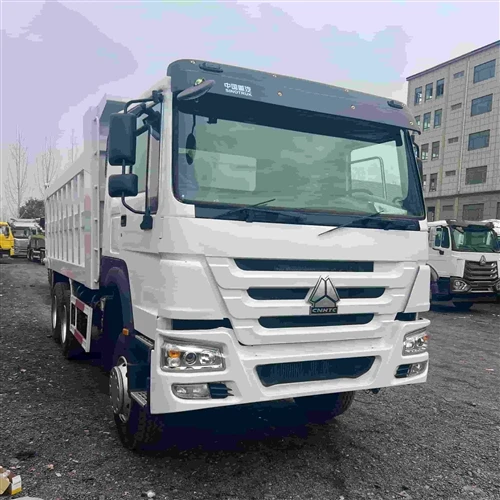
As a vital piece of equipment in modern engineering transportation, the dump truck's core function is to efficiently and safely complete the loading, unloading, and transportation of bulk materials. Its design integrates the synergistic technologies of mechanical structure, hydraulic system, and vehicle engineering, forming a functional system centered around "automatic dumping." It is widely used in construction sites, mining, road construction, and other scenarios.
Basic Functional Structure
The dump truck's core functions are realized through the collaborative efforts of three modules: the load-bearing system, the powertrain, and the hydraulic dumping system. The load-bearing system typically utilizes a high-strength steel cargo box, and balances load capacity with material costs through rational structural design (such as rib layout and optimized floor tilt angle). The powertrain provides the mechanical energy required for vehicle movement and also supplies power to the hydraulic system. The hydraulic dumping system is the key to its functionality. The onboard engine drives a hydraulic pump, converting mechanical energy into hydraulic energy, which in turn controls the operation of the cargo box's lifting cylinders and tilting mechanism to achieve material dumping.
Core Functional Principle
The dump truck's signature "automatic dumping" function relies on a sophisticated hydraulic linkage mechanism. When the driver operates the control switch (usually located in the cab), hydraulic oil flows from the tank through the filter into the gear pump, where it flows under pressure to the distribution valve. The distribution valve directs the high-pressure oil to the lift cylinder at the bottom of the cargo box, pushing the piston rod upward and rotating the cargo box about the rear hinge point (typically a tilt angle range of 45°-60°). Once dumping is complete, the reverse operation returns the hydraulic oil to the tank, retracting the lift cylinder and allowing the cargo box to return to its original horizontal position under its own weight. During this process, limit devices (such as mechanical stops or electronic sensors) precisely control the lift height to prevent structural damage caused by exceeding the limit.
Assistance and Safety Design
In addition to basic dumping functions, modern dump trucks generally incorporate a number of auxiliary features to enhance operational efficiency and safety. For example, some models are equipped with a synchronized lift system, which uses multi-cylinder linkage technology to ensure the cargo box remains level during lifting, preventing rollover caused by uneven loading. Anti-incorrect operation devices (such as a secondary confirmation switch or delayed lift function) reduce the risk of accidental dumping due to accidental activation. A cargo box locking mechanism mechanically locks the cargo box in place during transport, preventing accidental opening on bumpy roads. Furthermore, for specialized operating conditions (such as in cold regions or on steep slopes in mining areas), some dump trucks feature enhanced hydraulic oil temperature control systems, four-wheel drive transmission capabilities, and chassis reinforcement.
Functional Application Scenario Adaptation
The functional design of a dump truck must be tailored to the specific needs of its intended use. Medium-sized dump trucks (5-15 ton load capacity) are commonly used in construction projects, focusing on lightweight cargo boxes and high lifting speeds to accommodate frequent, small-batch material transfers. Mining applications favor heavy-duty dump trucks (30 ton load capacity and above), which require a stronger load-bearing structure and hydraulic system durability, while also being adaptable to rough terrain. For urban waste transportation, dump trucks must also meet environmental and safety standards, including low noise levels and enclosed cargo boxes with automatic tarpaulins.
In summary, the functional foundation of dump trucks is built on the deep integration of mechanical and hydraulic technologies. Through standardized modular design and scenario-specific adaptation, they cover a full range of applications, from basic material transport to complex operations. With the incorporation of intelligent technologies (such as electro-hydraulic proportional control and remote monitoring systems), the functional system of dump trucks will evolve towards precision and unmanned operation in the future.