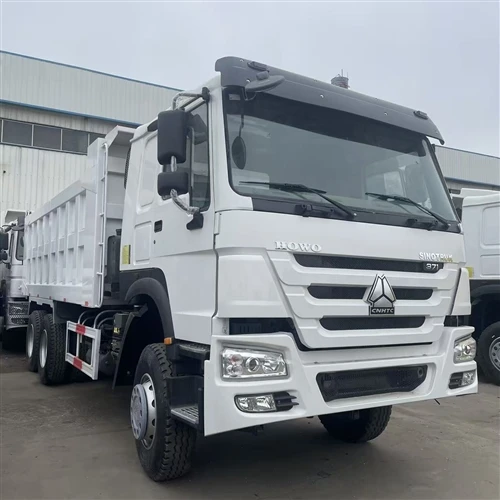

Complete Guide to Heavy Truck Maintenance: Extend Service Life, Ensure Driving Safety, and Reduce Operating Costs
Heavy trucks are the core carrier of logistics transportation, with year-round heavy loads, long-distance, high-intensity operations, and harsh working conditions. Once they fail, they not only suffer heavy losses, but also pose hidden safety risks. Proper preventive maintenance is the core of extending vehicle lifespan, ensuring driving safety, and reducing operating costs. This streamlined guide covers the key maintenance points and is suitable for drivers and fleets to quickly grasp and execute.

1, Core principle: Preventive maintenance, refuse post repair repairs
Heavy trucks are strictly prohibited from being repaired once they are broken. Regular preventive maintenance must be carried out according to mileage and working hours, and hidden dangers must be identified in advance to avoid major malfunctions such as engine lock up and brake failure. Under normal operating conditions, the manufacturer's maintenance cycle is strictly followed. In harsh conditions such as heavy load, high dust, and extreme weather, the maintenance cycle is shortened by 25% -50% to reduce component wear and tear.

2, Daily must do: check before departure and after receiving the car
Daily inspections are compliance requirements and the first line of defense for safety, which can be completed in 15 minutes. Records should be kept for future reference, with a focus on investigating the following:
-Oil and Leakage: Check the levels of engine oil, coolant, and power assist oil, and inspect the chassis and engine for any oil or water leaks
-Braking system: Test air pressure, check for air leaks in the air pipe, inspect brake components for cracks, and drain the accumulated water in the air reservoir
-Tires and Wheels: Cold test the tire pressure, check the tire wall for bulges or damage, ensure the pattern meets the standard, and tighten the wheel hub bolts
-Circuit lighting: All vehicle lights are normal, battery wiring is not corroded, and there is no fault light alarm on the dashboard
-Engine compartment: The belt is not loose or cracked, and the air filter is not blocked, ensuring normal intake and operation
After receiving the car, record any abnormal noises, vibrations, power drops, etc., report them for repair in a timely manner, and keep inspection records for at least 3 years to meet regulatory verification requirements.

请替换当前内容 Immigway Visa Consultancy was created to provide uniquely des igned premium services in the world of education and migration. As people are dreaming more. Immigway Visa Consultancy was created to provide uniquely des igned premium services in the world of education and migration. As people are dreaming more.
Eleganzo is a comprehensive design firm specializing in architecture,interior design,branded environments,strategic lanning,and urban design.
3, Core system critical maintenance (performed by mileage)

3.1 Engine: The Power Core, Focus on Lubrication and Cooling
Engine Oil & Oil Filter: Replace engine oil every 10,000–15,000 km under normal conditions; shorten to 5,000–7,500 km for heavy-duty use. Use dedicated diesel engine oil and replace the oil filter every time the oil is changed.
Cooling System: Replace coolant every 2–3 years or 30,000–60,000 km. Inspect the radiator and hoses for leaks to prevent engine overheating.
Filter Replacement: Replace the air filter every 20,000–30,000 km and the fuel filter every 15,000–20,000 km. Replace earlier in dusty environments.
3.2 Air Brake System: The Safety Core, No Compromises Allowed
Brake failure is a leading cause of truck accidents. Inspect brake pad/shoe thickness every 10,000 km and replace them immediately if worn beyond limits. Regularly adjust brake clearance, verify proper ABS operation, ensure sufficient air pressure and responsive braking performance to eliminate brake failure risks.
3.3 Tires & Chassis: Basic Support for Fuel Efficiency and Safety
Rotate tires every 10,000 km for even wear. Regularly inspect suspension and shock absorber components, lubricate key parts, and perform wheel alignment. This avoids uneven tire wear and vehicle deviation, while improving fuel economy.
3.4 Electrical System & Drivetrain
Regularly check the battery and wiring for aging or damage to prevent breakdowns caused by electrical faults. Change lubricating oil for the transmission and differential at scheduled intervals to avoid wear and damage to drivetrain components.

4, Core Precautions for Maintenance
-Select original or compliant accessories and specialized fluids to prevent secondary failures caused by inferior accessories
-Timely repair minor faults, strictly prohibit driving with problems, and avoid minor issues dragging over into major repairs
-Prepare anti freezing and pipeline protection in advance in winter, and focus on preventing engine high temperature in summer